
What’s In A Needle?
As dry needling becomes more and more popular, here is a quick and brief summary that answers a lot of questions our clients have. Dry needling involves inserting a solid-filiform needle directly into trigger points. Trigger points are tender regions within taut muscle bands that often refer pain to other regions of the body. Most of the time these referral points are near the specific muscle being treated, but not always!
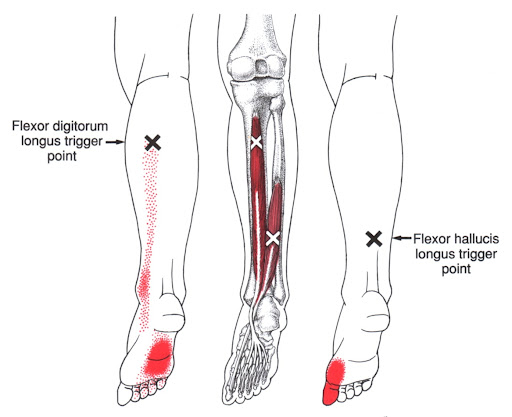
Example of a trigger point (black “X”) eliciting pain in red regions (referral pattern) and how this may assist with a condition such as Plantar Fasciitis
I often tell my clients we are looking to reproduce their “familiar pain,” and that although it can
be uncomfortable for a few seconds, it will ultimately be beneficial for them. Although we have several theories regarding the exact mechanism of why dry needling works, there are several things we do know.
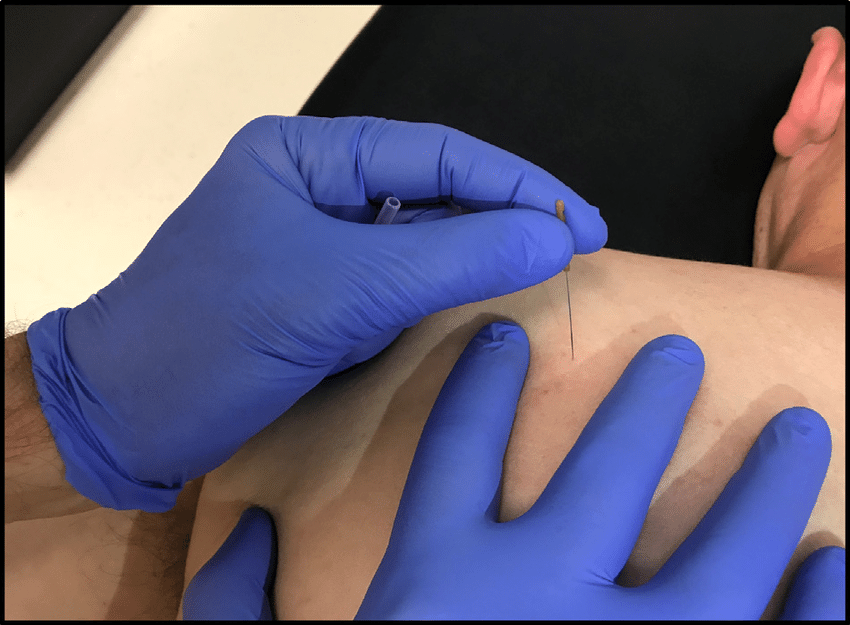
Trigger points have decreased blood supply, leading to decreased oxygen levels. Decreased oxygen means a more acidic environment, which acts like a magnet for several inflammatory markers in our body. Take an ankle sprain for example. These inflammatory markers are what cause pain and swelling after the sprain. This is good for sprains, since this forces us to rest and be extra careful. But not as good four our trigger points, since this can lead to increased pinpoint tenderness and even pain in different regions like our referral points.
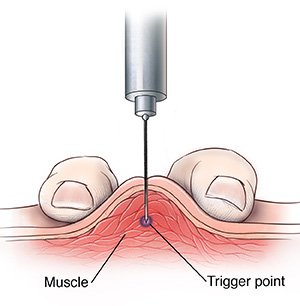
By inserting our solid, filiform needle directly into the trigger point, we elicit a twitch response from the muscle and introduce new blood flow into the area. It’s during this point that the familiar pain is reproduced. We know pain can be learned in the nervous system, so even without the current presence of injury we can still hurt (phantom limb pain or headaches for example). Some theories propose that the sensation of the familiar pain is an “unwiring” of the learned pain
pathways in the spinal cord.
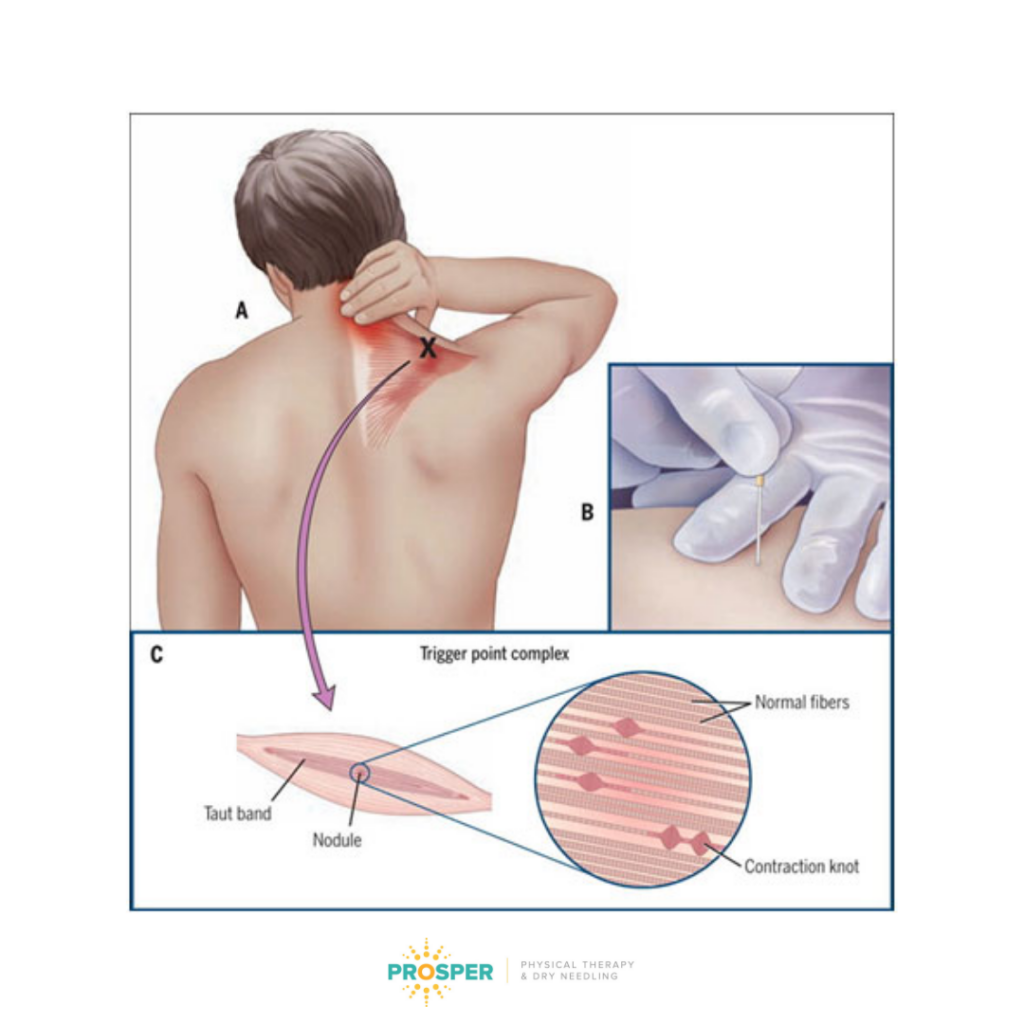
The exact mechanisms are still being researched, but it is easy to explain and visualize this as a “flushing out” the toxins in the muscle. We recommend drinking extra water and active mobility to help the cleansing process.
In my opinion the most important aspects of physical therapy – The importance of education, exercise therapy, staying physically active, reducing guarding patterns and “fight-or-flight,” promoting good sleep quality and stress management – are not diminished by incorporating dry needling. Dry needling is a powerful tool that not only helps to treat pain, but uncovers and provides more information for us to find the true source of pain!
By Dr. Christian Bechara, PT, DPT, CMTPT
Recent Comments