
Have you ever felt a sharp and/or nagging pain in between your shoulder blades? It is almost the perfect spot for pain because it is so difficult to try to massage on your own with your hands. Although you can find tender spots with a lacrosse ball, it seems like no amount of rolling takes away the pain! Today we’re going to discuss why this mid-back pain is so stubborn to take care of and show how complex this can be.
Before we start examining the potential structures involved it is important to understand that pain is processed in the brain. The close proximity between back pain and the spinal cord always makes even somewhat simple scenarios into complex situations. Upstream factors (stress, nutrition, quality of sleep, and prolonged inactivity) should always be addressed to find the root of the problem. Sometimes the pain is a signal that things need to be assessed and changed.
Classic mid-shoulder blade pain is directly over the rhomboid muscles. These muscles are important stabilizers of the shoulder blade. The shoulder blade “floats” on the ribs. It is held in place through the stabilization and balance of more than 15 muscles!

The floating nature of the shoulder blade (scapula) allows it to move along with the shoulder joint to maximize movement. We need full range of motion for joints to receive adequate nutrition and prevent breakdown over time. One potential cause of this mid-shoulder blade is lack of full shoulder range-of-motion.
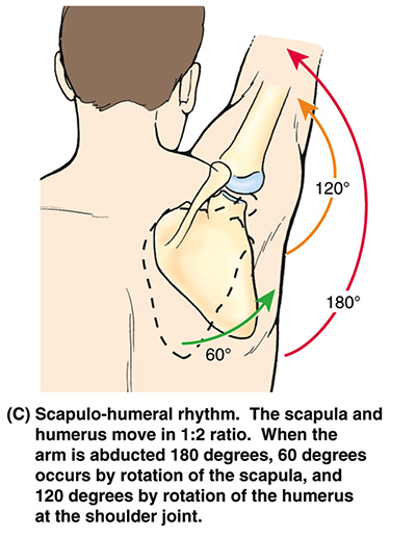
The shoulder blade also floats above the ribs, and they share some muscle attachments. We know that the ribs connect to the Thoracic spine (middle spine). The thoracic spine is commonly restricted in most of the population due to long periods of sitting, driving, and general inactivity. This is a common limitation that goes untreated but can provide long-term and lasting pain resolution.
One more thing to keep in mind when dealing with vague rhomboid/mid-shoulder blade pain is potential referrals of trigger points. As described in our previous post on plantar fasciitis, a trigger point is a part of a muscle that is receiving decreased blood flow. This decreased blood flow leads to an increase in inflammatory chemicals and pain over time. Enough pain can trigger the nervous system to start producing pain in nearby regions, which we call referred pain. We have many documented cases of these referral patterns.
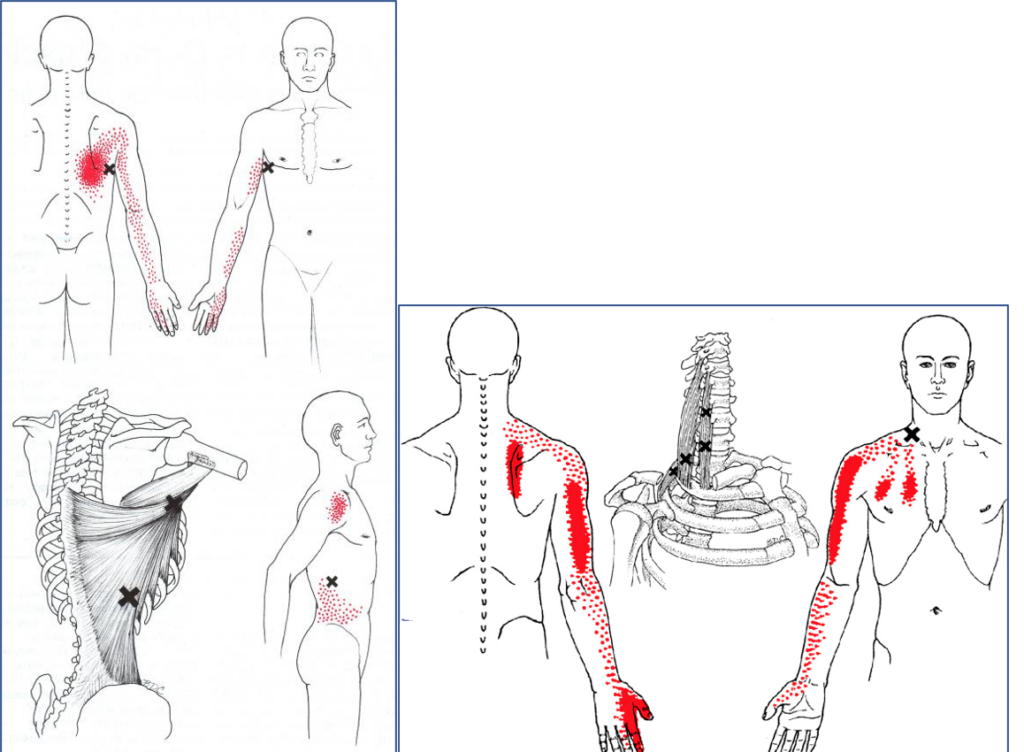
Right: The Scalenes are muscles above that can refer to the mid-shoulder blade region
Mid-back pain, although complex, can be treated with success! If you are experiencing mid-back or mid-shoulder blade pain, feel free to schedule your discovery visit today!
- Christian Bechara PT, DPT, CMTPT
Recent Comments